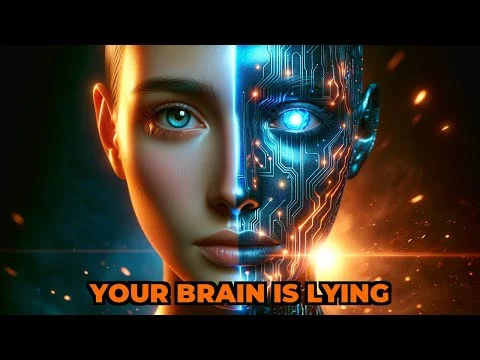
Why Do Almost-Human Faces Terrify Us?
March 28, 2026
Almost-human faces trigger terror because they activate an ancient survival mechanism called the uncanny valley effect, which evolved to help our ancestors avoid diseased or dead individuals. This psychological phenomenon causes our brains to detect subtle wrongness in faces that appear almost—but not quite—human.
What Is the Uncanny Valley?
The uncanny valley was first identified by Japanese roboticist Masahiro Mori in 1970. His research revealed a fascinating pattern: as robots become more human-like, our positive feelings toward them increase—until they cross a critical threshold. At this point, affection suddenly plummets into revulsion and fear.
This valley-shaped graph of human emotional response explains why we’re comfortable with obviously mechanical robots and love other humans, but feel deeply unsettled by androids, CGI characters, and AI-generated faces that look almost perfectly human.
The Brain’s Ancient Warning System
Scientists believe the uncanny valley represents an evolutionary adaptation that helped our ancestors survive. Your brain constantly scans faces for micro-errors—subtle signs that something is wrong in ways you can’t consciously identify. When it detects these anomalies, it triggers an immediate alarm: this could be a corpse, someone with a contagious disease, or another threat to avoid.
This isn’t a glitch in human psychology—it’s a feature. Our ancestors who could quickly identify and avoid potentially dangerous individuals had better survival rates. Those who were too trusting of strange or “off” faces were more likely to encounter disease or other hazards.
Modern Triggers of the Uncanny Valley
Today, we encounter uncanny valley triggers more frequently than ever before. AI-generated faces, deepfakes, CGI movie characters, and humanoid robots all activate this ancient fear response. Social media platforms are flooded with synthetic human images that look remarkably realistic yet somehow wrong.
This constant exposure means millions of people experience low-level anxiety and discomfort daily without understanding why. Their brains are running ancient terror code, detecting threats that don’t actually exist but trigger the same survival instincts that kept our species alive.
The Psychology Behind the Fear
The uncanny valley effect operates below conscious awareness. You might look at an AI-generated face and feel uneasy without being able to pinpoint exactly what’s wrong. Your brain notices inconsistencies in skin texture, eye movement, facial proportions, or micro-expressions that don’t quite match human norms.
This subconscious detection system is incredibly sophisticated, picking up on details that even advanced AI struggles to perfect. It’s why even the most realistic synthetic faces often feel “off” to human observers.
Implications for Technology and Society
As AI and robotics continue advancing, understanding the uncanny valley becomes increasingly important. Developers of virtual characters, humanoid robots, and AI avatars must navigate this psychological minefield to create technology that doesn’t trigger human fear responses.
Some researchers suggest we may gradually adapt to synthetic human faces as exposure increases. Others believe the uncanny valley represents a fundamental limit to human-AI interaction that technology must work around rather than overcome.
FREQUENTLY ASKED
What causes the uncanny valley effect? ▾
The uncanny valley occurs when our brains detect subtle imperfections in almost-human faces, triggering an evolutionary survival mechanism designed to avoid diseased or dead individuals.
Why do AI faces look creepy? ▾
AI-generated faces often fall into the uncanny valley because they appear almost perfectly human but contain micro-errors in proportions, expressions, or skin texture that our brains instinctively recognize as wrong.
Can people overcome the uncanny valley effect? ▾
While the uncanny valley is an automatic response, some research suggests people may gradually become less sensitive to it with repeated exposure to synthetic human faces.