What Are the Most Mind-Blowing Space Facts That Scientists Can't Explain?
March 25, 2026 · 5 min read
The Universe’s Greatest Mysteries Remain Unsolved
The most mind-blowing unexplained space facts include the WOW! Signal detected in 1977 that has never been identified, the Boötes Void containing almost no galaxies across 330 million light-years, and the reality that dark matter and dark energy make up 95% of the universe yet remain completely invisible and undetectable.
Space continues to challenge our understanding of reality with discoveries so strange that even leading astrophysicists struggle to provide satisfying explanations. From mysterious signals originating in deep space to cosmic voids that shouldn’t exist, the universe holds secrets that keep scientists awake at night, questioning everything they thought they knew about the cosmos.
The WOW! Signal: A Message From the Void
In 1977, a radio telescope at Ohio State University detected something extraordinary. A signal from deep space arrived with such power and precision that astronomer Jerry Ehman circled it on the printout and wrote one word: “Wow!” The signal lasted 72 seconds, originated from the constellation Sagittarius, and displayed characteristics that suggested an artificial origin.
Despite decades of searching, the WOW! Signal has never repeated. No natural phenomenon adequately explains its properties. Its frequency matched the hydrogen line at 1420 MHz—exactly where scientists would expect an intelligent civilization to broadcast. Yet it vanished as mysteriously as it appeared, leaving one of astronomy’s greatest unsolved mysteries.
The Boötes Void: A Cosmic Empty Space That Defies Logic
Imagine a region of space so vast and empty that it challenges our understanding of cosmic structure. The Boötes Void, also called the Great Nothing, spans approximately 330 million light-years—an area that should contain thousands of galaxies but holds fewer than 60.
This cosmic supervoid is so empty that if Earth were located at its center, humans wouldn’t have discovered other galaxies until the 1960s. Scientists have proposed various theories for its existence, from primordial density fluctuations to the effects of dark energy, but no single explanation satisfactorily accounts for such extreme emptiness in a universe where matter typically clusters together.
Dark Matter and Dark Energy: The Invisible 95%
Perhaps the most humbling discovery in modern astronomy is that everything we can see, measure, and understand represents less than 5% of the universe. Dark matter comprises about 27% of cosmic composition, while dark energy accounts for approximately 68%—yet both remain completely invisible and undetectable through conventional means.
Dark matter reveals itself only through gravitational effects on visible matter. Galaxies rotate too quickly to be held together by the gravity of their visible stars alone, requiring additional invisible mass. Dark energy is even more mysterious, causing the universe’s expansion to accelerate rather than slow down as gravity would predict. These discoveries fundamentally challenge our understanding of physics and reality itself.
Neutron Stars: Physics-Defying Cosmic Objects
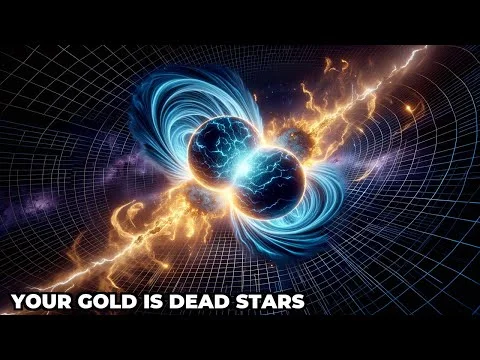
When massive stars collapse, they create objects so dense that they break our normal understanding of matter. Neutron stars pack more mass than our sun into a sphere just 20 kilometers across. A single teaspoon of neutron star material would weigh approximately 10 million tons on Earth.
These stellar remnants spin at incredible rates—some rotating 700 times per second while maintaining structural integrity. The physics governing neutron stars pushes the boundaries of what matter can withstand. Their magnetic fields are trillions of times stronger than Earth’s, and their surfaces experience gravity 200 billion times more intense than what we experience.
The Cosmic Microwave Background Anomalies
The cosmic microwave background (CMB) radiation provides a snapshot of the universe when it was only 380,000 years old. While this relic radiation generally matches theoretical predictions, several unexplained anomalies persist. The “cold spot” in the CMB is significantly larger and cooler than statistical models predict, while the “axis of evil” shows unexpected alignment in temperature fluctuations.
These anomalies challenge the standard model of cosmology. Some scientists propose they result from interactions with parallel universes, while others suggest fundamental flaws in our understanding of cosmic inflation. Despite decades of study, these features in the universe’s baby picture remain unexplained.
Fast Radio Bursts: Cosmic Enigmas
Fast Radio Bursts (FRBs) are intense flashes of radio energy that last mere milliseconds but release more energy than our sun produces in days. First discovered in 2007, these cosmic phenomena originate billions of light-years away, yet their source remains unknown.
While most FRBs occur once and never repeat, some show periodic patterns. The repeating FRB 180916.J0158+65 follows a 16-day cycle, active for four days then silent for twelve. Scientists have proposed explanations ranging from neutron star collisions to exotic physics, but no theory adequately accounts for all observed properties of these mysterious signals.
The Great Filter and Fermi Paradox
The universe should be teeming with intelligent life. With billions of potentially habitable planets and billions of years for evolution to work, the absence of detected alien civilizations presents a profound mystery known as the Fermi Paradox.
The Great Filter hypothesis suggests that somewhere in the evolutionary process from simple life to space-faring civilization lies an extremely difficult step that most species cannot overcome. Whether this filter lies behind us or ahead of us has profound implications for humanity’s future and helps explain the cosmic silence that pervades our observations of the universe.
FREQUENTLY ASKED
What is the WOW! Signal and why can't scientists explain it? ▾
The WOW! Signal was a powerful 72-second radio transmission detected from space in 1977 that displayed characteristics suggesting artificial origin but has never repeated or been explained despite decades of investigation.
How much of the universe is actually invisible to us? ▾
Approximately 95% of the universe consists of dark matter and dark energy that cannot be directly observed, meaning everything we can see represents less than 5% of cosmic reality.
What makes the Boötes Void so mysterious? ▾
The Boötes Void spans 330 million light-years but contains almost no galaxies in a region that should hold thousands, defying our understanding of how cosmic structures form.