What Are the Most Terrifying Facts About Space That Scientists Don't Want You to Know?
March 25, 2026
The most terrifying space facts include silent black holes drifting toward Earth, invisible deadly radiation filling the cosmos, and the universe expanding faster than light speed. Scientists have confirmed these phenomena through decades of research, revealing a universe far more dangerous and mysterious than most people realize.
Black Holes Are Silently Drifting Through Our Galaxy
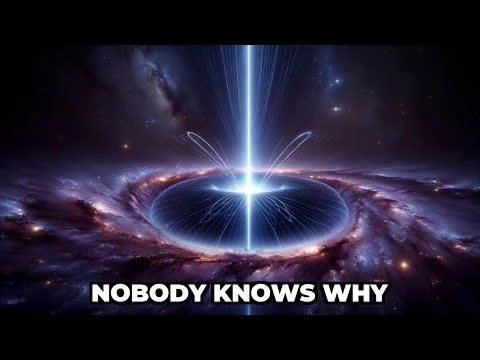
Right now, rogue black holes are moving through the Milky Way, and astronomers have no way to predict their exact locations or trajectories. These stellar remnants move silently through space, invisible to most detection methods. In 2022, scientists confirmed that a black hole passed within 80 light-years of Earth approximately 70,000 years ago—a cosmic near-miss that could have had catastrophic consequences for our planet’s gravitational stability.
Unlike the supermassive black holes at galaxy centers, these wandering black holes are stellar-mass objects created when massive stars collapse. They emit no light and can only be detected when they interact with nearby matter or bend light from background stars through gravitational lensing.
Space Radiation Would Kill You Instantly
Contrary to popular belief, space isn’t empty—it’s filled with high-energy cosmic radiation that would be lethal to unprotected humans within seconds. This invisible radiation consists of charged particles traveling at nearly the speed of light, originating from supernovas, black holes, and other violent cosmic events.
Without Earth’s magnetic field and atmosphere acting as shields, this radiation would cause immediate cellular damage, DNA destruction, and rapid death. Even astronauts on the International Space Station, protected by Earth’s magnetic field, receive radiation doses equivalent to several chest X-rays daily.
The Light You See Tonight Left Before Earth Existed
When you look at the night sky, you’re literally seeing into the past. Light from some visible stars began its journey billions of years ago, before our solar system even formed. This means many of the stars you observe may have already died, their final moments still traveling through space toward Earth.
The Andromeda Galaxy, visible to the naked eye, appears as it was 2.5 million years ago. By the time its light reaches us, entire stellar generations could have lived and died within that galaxy.
The Universe Is Expanding Faster Than Light
Perhaps the most unsettling discovery in modern astronomy is that the universe’s expansion is accelerating, driven by mysterious dark energy. Distant galaxies are moving away from us faster than the speed of light—not because they’re traveling through space at that speed, but because space itself is expanding.
This means there are regions of the universe we will never be able to observe or reach, no matter how advanced our technology becomes. The observable universe is shrinking in terms of what we can potentially access, creating an ever-expanding cosmic horizon beyond which information cannot travel.
We May Be Completely Alone
The Rare Earth hypothesis suggests that the conditions necessary for complex life are so extraordinarily specific that Earth might be unique in the observable universe. The precise distance from our star, the presence of a large moon to stabilize our rotation, Jupiter’s role as a cosmic vacuum cleaner protecting us from asteroids, and countless other factors had to align perfectly.
Statistically, the probability of all these conditions occurring simultaneously approaches zero, suggesting that while microbial life might exist elsewhere, complex life could be incredibly rare or entirely unique to Earth.
FREQUENTLY ASKED
How close can a black hole get to Earth before it becomes dangerous? ▾
Scientists estimate that a black hole would need to come within about 1-2 light-years of Earth to significantly disrupt our solar system's gravitational balance and pose an existential threat.
How long would a human survive in space without a suit? ▾
A human would lose consciousness within 15 seconds due to oxygen deprivation and die within 1-2 minutes, though cosmic radiation would begin causing cellular damage immediately upon exposure.
Are there really stars we can see that no longer exist? ▾
Yes, many visible stars died long ago, but their light is still traveling to Earth—when we see them, we're observing how they appeared years, decades, or even millennia in the past.