How Does the Ocean Floor Produce Oxygen Without Sunlight?
April 9, 2026
Scientists have discovered that the ocean floor can produce oxygen through electrochemical reactions in complete darkness, without any living organisms or sunlight. This groundbreaking finding challenges our fundamental understanding of oxygen production and could revolutionize theories about life on Earth and beyond.
The Discovery of Dark Oxygen
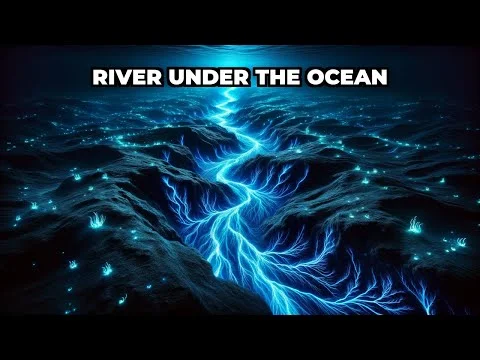
Researchers studying the deep ocean have identified a phenomenon they call “dark oxygen” - oxygen molecules generated in the abyssal depths where sunlight never penetrates. Unlike photosynthesis, which requires light and living plants, this process occurs through purely chemical means on the seafloor itself.
The discovery was made using advanced deep-sea monitoring equipment that detected unexpected oxygen concentrations in areas where traditional biological oxygen production should be impossible. This finding has sent shockwaves through the scientific community, as it contradicts decades of established biological principles.
How Electrochemical Reactions Create Oxygen
The mechanism behind dark oxygen production involves electrochemical reactions between seawater and mineral-rich rocks on the ocean floor. When seawater comes into contact with certain metallic nodules and rock formations, electrical currents are generated that can split water molecules (H₂O) into hydrogen and oxygen.
These naturally occurring “batteries” on the seafloor contain metals like manganese, iron, and cobalt that facilitate the electrochemical process. The reactions essentially perform electrolysis - the same process used in laboratories to separate water into its component gases - but occurring naturally in the deep ocean environment.
Implications for Life on Earth and Beyond
This discovery has profound implications for our understanding of where life can exist. If oxygen can be produced without photosynthesis, it opens up entirely new possibilities for ecosystems in environments previously thought uninhabitable.
The finding is particularly exciting for astrobiology - the study of potential life beyond Earth. Many moons in our solar system, such as Europa and Enceladus, have subsurface oceans beneath ice shells where no sunlight penetrates. If similar electrochemical processes occur on these alien ocean floors, they could potentially support oxygen-breathing life forms.
Rewriting the Rules of Habitability
For centuries, scientists have believed that complex life requires oxygen produced through photosynthesis by plants, algae, or cyanobacteria. This new evidence suggests that habitable environments could exist in places where photosynthesis is impossible, dramatically expanding the potential locations where life might thrive.
The research also raises questions about early Earth’s atmosphere and the evolution of oxygen-dependent life. It’s possible that electrochemical oxygen production played a role in Earth’s atmospheric development long before photosynthetic organisms became dominant.
Future Research Directions
Scientists are now working to understand the full extent and mechanisms of dark oxygen production. Research teams are investigating different types of seafloor minerals, varying ocean depths, and environmental conditions that might affect this process.
This discovery represents just the beginning of our understanding of non-biological oxygen production. As technology advances and we explore more of our planet’s deep oceans, we may uncover additional mechanisms that challenge our current understanding of life’s requirements.
FREQUENTLY ASKED
Can dark oxygen support marine life? ▾
While the research is ongoing, the oxygen produced through these electrochemical reactions could potentially support oxygen-dependent organisms in deep-sea environments where photosynthesis is impossible.
Does this discovery change our search for alien life? ▾
Yes, it significantly expands the potential habitable zones we should consider when searching for life, particularly in subsurface oceans on icy moons like Europa and Enceladus.
How much oxygen is produced by this process? ▾
The exact quantities are still being studied, but early measurements suggest the process can produce measurable amounts of oxygen in localized deep-sea environments.