What Is the Largest Cave on Earth and Why Does It Have Its Own Weather?
March 28, 2026 · 4 min read
What Is the Largest Cave on Earth and Why Does It Have Its Own Weather?
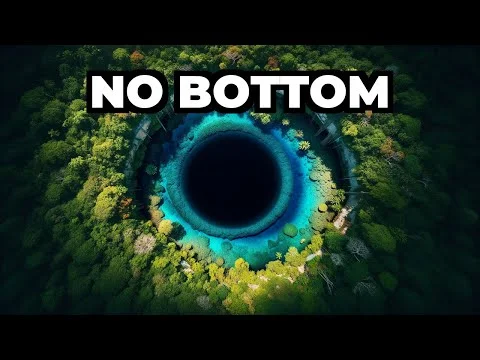
Hang Son Doong in Vietnam is the largest cave on Earth, so massive that it contains its own weather system with real clouds forming inside, plus underground jungles with species found nowhere else on the planet. This subterranean world stretches 5.5 miles long, 660 feet high, and 490 feet wide—large enough for Boeing 747 jets to fly through in formation.
Hidden beneath the Phong Nha-Ke Bang mountains of central Vietnam, Hang Son Doong (which translates to “Mountain River Cave”) represents one of Earth’s most extraordinary natural phenomena. Despite being formed over 2-5 million years ago, this underground universe remained completely unknown to science until 1991, and its full extent is still being discovered today.
The Discovery That Changed Cave Science
The story of Hang Son Doong’s discovery reads like an adventure novel. In 1991, a local man named Ho Khanh stumbled upon the cave entrance while seeking shelter from a storm. What he encountered was so overwhelming—the thunderous roar of an underground river and fierce winds blasting from the cave mouth—that he fled in terror and kept the location secret for nearly two decades.
It wasn’t until 2009 that Ho Khanh finally led British cave explorers from the British Cave Research Association to the site. The team was immediately stunned into silence. Their measuring equipment couldn’t even comprehend the cave’s full dimensions—it was simply too large for their instruments to process.
A Cave Large Enough for Skyscrapers
To understand the sheer scale of Hang Son Doong, consider that its main chamber could easily swallow an entire New York City block, complete with skyscrapers. The cave system stretches 5.5 miles in length, reaches heights of 660 feet, and spans 490 feet in width. This makes it not just the largest known cave passage on Earth, but a space so vast it defies human comprehension.
The cave was carved by an ancient underground river that dissolved the surrounding limestone over millions of years. Remarkably, this river still exists today, roaring through the cave floor in perpetual darkness. Explorers report hearing its thunderous sound long before they can see the water itself.
Natural Formations That Defy Belief
Inside Hang Son Doong, explorers have discovered stalactites taller than 25-story buildings. These massive calcium formations required hundreds of thousands of years to grow, drop by microscopic drop. Even more mysterious are the cave’s giant pearls—perfectly spherical calcium carbonate formations that scientists still cannot fully explain. Some of these pearls are the largest ever recorded on Earth, taking between 100,000 to 500,000 years to form layer by layer.
Underground Jungles and New Species
Perhaps the most extraordinary feature of Hang Son Doong is its underground ecosystem. The cave’s ceiling has collapsed in two massive sections, creating enormous openings called dolines that allow full sunlight to pour into the cave. These natural skylights have enabled entire jungles to grow inside the mountain—environments that explorers have dubbed the “Garden of Edam.”
These underground forests contain trees, ferns, and vegetation that have evolved in near-total isolation for thousands of years. Scientists believe some of these plant species may be entirely new to science, still awaiting classification. The cave also hosts a variety of animals adapted to life without light, including blind fish, cave-dwelling spiders, and specialized crustaceans that have evolved in the underground river system.
Weather Inside a Mountain
The phenomenon that gives Hang Son Doong its own weather system stems from the dramatic temperature differences between the massive cave interior and the outside world. These differences create powerful wind currents—gusts so strong they can rip equipment from explorers’ hands.
When humid air from the underground jungles meets the cooler cave atmosphere, real clouds form inside the mountain. This internal weather system is so stable and self-contained that ancient pollen samples suggest the cave functioned as a perfect refuge during ice ages, preserving life while the outside world froze.
The Unexplored Frontier
Despite decades of exploration, the deepest sections of Hang Son Doong remain unreachable. A massive calcite formation nicknamed “the Great Wall of Vietnam” blocks passage into unexplored areas. Ground-penetrating radar suggests that beyond this barrier may lie an entirely separate cave system, potentially even larger than Son Doong itself.
Exclusive Access to an Underground World
Hang Son Doong remains one of the most exclusive destinations on Earth. The Vietnamese government strictly limits access to just 1,000 visitors per year, with tours costing up to $3,000 per person and requiring months of advance booking. This restriction exists not only for preservation but also for safety—the underground river can flood catastrophically during monsoon season, filling sections 30 feet deep within hours.
The cave’s significance extends beyond its physical dimensions. Hang Son Doong represents proof that our planet still holds secrets vast enough to defy imagination, hidden in plain sight for millions of years. As we continue to explore space and map ocean floors, this Vietnamese mountain reminds us that Earth itself remains largely mysterious, with wonders waiting to be discovered in the most unexpected places.
FREQUENTLY ASKED
How big is Hang Son Doong cave compared to other caves? ▾
Hang Son Doong is so large that Boeing 747 jets could fly through it in formation, making it significantly larger than any other known cave passage on Earth.
Can anyone visit Hang Son Doong cave? ▾
Only 1,000 people per year are allowed to visit Hang Son Doong, with tours costing up to $3,000 and requiring months of advance booking through approved operators.
What animals live inside Hang Son Doong? ▾
The cave hosts blind fish, cave-dwelling spiders, and specialized crustaceans that evolved in complete darkness, plus surface animals in the underground jungle areas.