Is There Really a River Flowing Under the Atlantic Ocean?
April 8, 2026
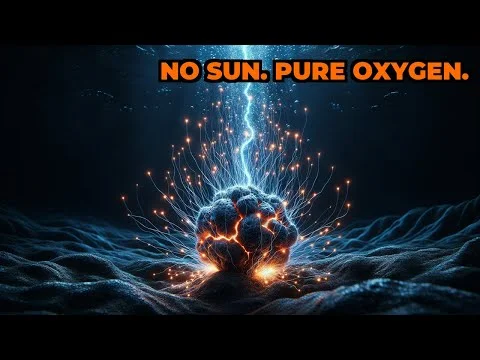
Yes, scientists have discovered a massive hydrogen “river” flowing beneath the Atlantic Ocean along the Mid-Atlantic Ridge, stretching for thousands of kilometers. This underwater current is created by chemical reactions between seawater and exposed rocks where tectonic plates are pulling apart.
How the Underwater Hydrogen River Forms
The Mid-Atlantic Ridge is a massive underwater mountain range that runs down the center of the Atlantic Ocean. Here, tectonic plates are constantly pulling apart, exposing fresh rock to seawater. When seawater comes into contact with these newly exposed rocks, particularly those rich in iron and magnesium, a process called serpentinization occurs.
During serpentinization, the minerals in the rock react with water, producing hydrogen gas as a byproduct. This hydrogen doesn’t just disperse randomly—it forms concentrated currents that flow along the ridge system, creating what scientists describe as an underwater “river” of hydrogen-rich water.
Why This Discovery Matters for Life on Earth
This hydrogen river represents something extraordinary: an ecosystem that operates completely independently of sunlight. Deep-sea organisms near hydrothermal vents and along the Mid-Atlantic Ridge use chemosynthesis instead of photosynthesis to survive. They convert the hydrogen and other chemicals into energy, forming the base of a food web that exists in perpetual darkness.
These discoveries challenge our understanding of where life can exist on Earth. The organisms thriving in these hydrogen-rich environments don’t need any energy from the sun, relying entirely on chemical processes driven by geological activity. This includes bacteria, tube worms, and other specialized creatures that have adapted to extreme conditions.
Implications for Life Beyond Earth
The existence of hydrogen-powered ecosystems in Earth’s oceans has profound implications for astrobiology. If life can thrive in the complete absence of sunlight using only chemical energy from geological processes, similar conditions might support life on other worlds.
Icy moons like Europa and Enceladus, which orbit Jupiter and Saturn respectively, likely have subsurface oceans beneath their frozen crusts. These moons experience tidal forces that could drive similar rock-water interactions, potentially creating hydrogen-rich environments. Even planets that appear “dead” from the surface might harbor active geological processes that could support chemosynthetic life.
The Scale of the Discovery
The hydrogen currents along the Mid-Atlantic Ridge span thousands of kilometers, making this one of the largest continuous ecosystems on our planet. The ridge system itself extends from the Arctic Ocean to the Southern Ocean, creating a vast network of potential hydrogen-producing sites.
Researchers are still mapping the full extent of these hydrogen flows and studying the diverse communities they support. Each new discovery adds to our understanding of how life adapts to extreme environments and expands the potential habitable zones we might find throughout the universe.
This underwater hydrogen river demonstrates that our planet still holds incredible secrets, even in regions we thought we understood. It reminds us that life finds ways to exist in the most unexpected places, powered by the dynamic geological processes that shape our world.
FREQUENTLY ASKED
How deep is the hydrogen river under the Atlantic Ocean? ▾
The hydrogen-rich currents flow along the Mid-Atlantic Ridge, which lies at depths of 2,000 to 4,000 meters (6,500 to 13,000 feet) below the ocean surface.
Can this underwater hydrogen river be used as an energy source? ▾
While the hydrogen concentrations are significant for supporting marine ecosystems, the technical challenges of harvesting hydrogen from such depths make it impractical as a human energy source with current technology.
Are there other hydrogen rivers like this in the world's oceans? ▾
Similar processes likely occur at other mid-ocean ridges around the globe, including the East Pacific Rise and the Southwest Indian Ridge, wherever tectonic plates are actively separating.