What Are Fast Radio Bursts and Why Do They Repeat in Patterns?
March 26, 2026
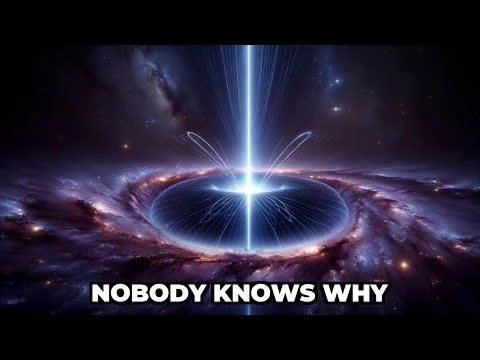
Fast Radio Bursts (FRBs) are extremely powerful millisecond flashes of radio energy from deep space that release more energy in a single burst than our Sun produces in three days. Some FRBs repeat in seemingly mechanical patterns, like FRB 20201124A which repeated every 16 days before going silent, challenging our understanding of natural cosmic phenomena.
The Discovery of Fast Radio Bursts
Fast Radio Bursts were first discovered in 2007 when astronomers analyzing archived data from the Parkes Observatory in Australia found an anomalous signal. These cosmic phenomena appear as brief, intense flashes of radio waves lasting only milliseconds, yet they contain tremendous amounts of energy. The signals originate from billions of light-years away, making their detection even more remarkable.
Since that first discovery, radio telescopes around the world have detected hundreds of FRBs. Most appear as one-time events, flashing once and never repeating. However, a small percentage of these bursts show repeating behavior that has puzzled scientists and opened new avenues of research.
The Mystery of Repeating Patterns
What makes certain FRBs particularly intriguing is their repeating nature. FRB 20201124A stands out as one of the most active repeaters ever observed, producing 1,863 individual bursts over just 47 days. Even more puzzling, this source followed a precise 16-day activity cycle before falling completely silent.
This mechanical precision challenges conventional explanations. Natural cosmic events typically exhibit randomness and irregularity. The clockwork-like behavior of some repeating FRBs suggests either an unknown natural mechanism or potentially artificial origins, though the latter remains highly speculative.
Leading Scientific Theories
Scientists have proposed several theories to explain Fast Radio Bursts. The most widely accepted explanation involves neutron stars—ultra-dense stellar remnants with incredibly strong magnetic fields. When these magnetars experience starquakes or magnetic field reorganizations, they could release the enormous amounts of energy observed in FRBs.
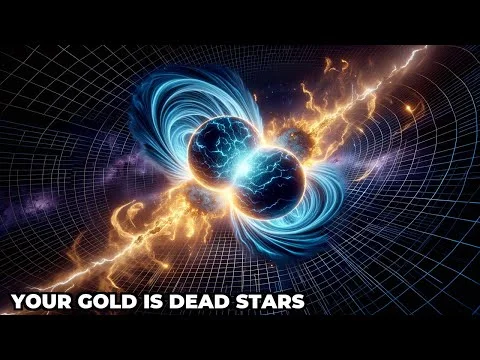
Colliding neutron stars represent another possibility. When these dense objects spiral into each other, they create catastrophic events that could generate the observed radio signals. However, this theory struggles to explain repeating FRBs, as such collisions would destroy the source objects.
More speculative theories include interactions between neutron stars and black holes, or even advanced alien civilizations using powerful energy beams for interstellar communication or propulsion systems. While these exotic explanations remain scientifically valid possibilities, most researchers favor natural astrophysical phenomena.
Current Research and Future Discoveries
NASA and international space agencies continue studying FRBs using advanced radio telescope arrays like the Canadian Hydrogen Intensity Mapping Experiment (CHIME) and the Deep Space Network. These instruments can detect and analyze FRBs in real-time, providing crucial data about their origins and characteristics.
The study of Fast Radio Bursts represents one of modern astronomy’s most active research areas. Each new detection adds pieces to the puzzle, bringing scientists closer to understanding these mysterious signals from the depths of space. Whether the answer lies in exotic stellar physics or something more extraordinary, FRBs continue to challenge our knowledge of the universe.
FREQUENTLY ASKED
How powerful are Fast Radio Bursts compared to our Sun? ▾
A single Fast Radio Burst releases more energy in milliseconds than our Sun produces over three entire days, making them among the most energetic events in the universe.
Could Fast Radio Bursts be signals from alien civilizations? ▾
While alien origins remain a theoretical possibility that scientists consider, most researchers believe FRBs result from natural astrophysical phenomena like neutron star activity.
Why do some Fast Radio Bursts repeat while others don't? ▾
Scientists don't fully understand why some FRBs repeat in patterns while others appear only once, but it likely relates to different source mechanisms or environments around the originating objects.