What Are Fast Radio Bursts and Why Are They Defying Physics?
March 26, 2026
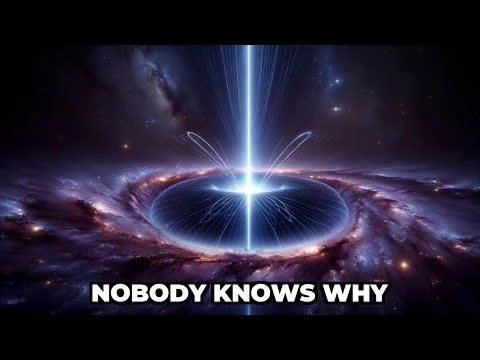
Fast Radio Bursts (FRBs) are millisecond-duration flashes of radio energy from deep space that release more power in a fraction of a second than our Sun produces in three days. These mysterious signals are detected by radio telescopes worldwide and represent one of the most puzzling phenomena in modern astrophysics.
The Discovery That Changed Everything
First discovered in 2007, Fast Radio Bursts initially appeared to be random, one-time events scattered across the cosmos. However, the detection of FRB 20201124A shattered our understanding of these cosmic phenomena. This particular burst source exhibited behavior that seemed almost artificial—repeating on a precise 16-day cycle with mechanical regularity.
The burst fired an astounding 1,863 individual pulses over just 47 days before falling completely silent. This pattern defies natural randomness and has left scientists scrambling for explanations.
The Staggering Energy Scale
To comprehend the power of Fast Radio Bursts, consider that a single burst can release more energy than our Sun generates over three entire days—all compressed into mere milliseconds. This energy output is so extreme that it challenges our understanding of what natural processes could possibly generate such intense radio waves.
The signals travel billions of light-years across space, meaning their source must be incredibly powerful to remain detectable when they reach Earth. Even accounting for the vast distances involved, the energy requirements are mind-boggling.
Leading Scientific Theories
Researchers have proposed several explanations for Fast Radio Bursts, though none fully account for the repeating patterns observed in some sources.
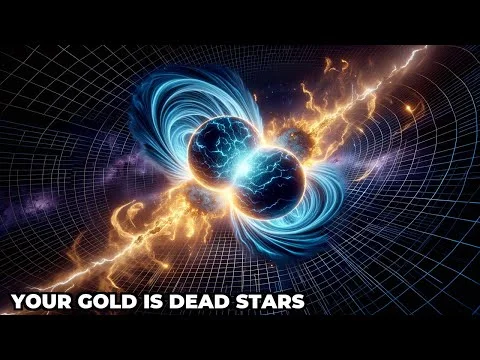
Colliding Neutron Stars: The most widely accepted theory suggests FRBs originate from neutron star collisions or magnetar flares. These ultra-dense stellar remnants can generate enormous magnetic fields capable of producing intense radio emissions.
Alien Megastructures: While speculative, some scientists seriously consider the possibility that repeating FRBs could indicate artificial origins. The precise timing and enormous energy output align with theoretical alien technologies designed to harvest stellar energy.
Black Hole Activity: Another hypothesis involves matter falling into black holes or interactions between black holes and neutron stars, though this doesn’t adequately explain the regular periodicity.
The Mystery Deepens
What makes FRB 20201124A particularly unsettling is its sudden silence after the intense burst period. The transition from hyperactivity to complete radio silence suggests either a cyclical process we don’t understand or potentially controlled behavior.
NASA and other space agencies are dedicating significant resources to studying these phenomena, deploying increasingly sensitive radio telescope arrays to detect and analyze Fast Radio Bursts in real-time.
Implications for Our Understanding of the Universe
Fast Radio Bursts represent a fundamental challenge to our cosmic knowledge. Whether they prove to be exotic natural phenomena or something more extraordinary, their study is pushing the boundaries of physics and astronomy.
The fact that we’re detecting signals with such precise timing and enormous energy output—signals that then vanish as mysteriously as they appeared—suggests our universe may be far stranger and more complex than we currently comprehend.
FREQUENTLY ASKED
How often do Fast Radio Bursts occur? ▾
Astronomers detect approximately 1,000 Fast Radio Bursts per day across the entire sky, though most are one-time events that never repeat.
Could Fast Radio Bursts be signals from aliens? ▾
While most scientists favor natural explanations like neutron stars, the precise timing patterns of some repeating FRBs have led researchers to seriously consider artificial origins as a possibility.
Are Fast Radio Bursts dangerous to Earth? ▾
Fast Radio Bursts pose no danger to Earth as they originate billions of light-years away and only affect radio frequencies, not harmful radiation.