What Are Brine Pools and Why Do They Kill Ocean Life?
March 28, 2026
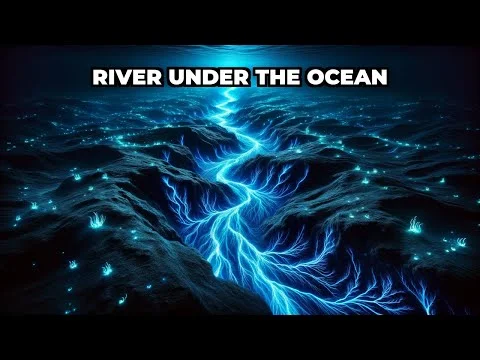
Brine pools are underwater lakes of extremely salty water that sit on the seafloor, creating deadly death traps for marine life that enters them. These mysterious formations are five times saltier than normal seawater and instantly paralyze or kill fish, crabs, and other creatures that cross their boundaries.
How Brine Pools Form on the Ocean Floor
Brine pools form when underground salt deposits dissolve into seawater, creating pockets of hypersaline water so dense they don’t mix with the surrounding ocean. This density difference allows them to maintain distinct boundaries, complete with their own shorelines, waves, and surface tension—creating the surreal appearance of a lake within the ocean.
These underwater formations can be found in various locations worldwide, including the Gulf of Mexico, the Mediterranean Sea, and the Red Sea. The most famous examples reach depths of thousands of feet below the surface, where crushing pressure and complete darkness add to their alien-like environment.
Why Brine Pools Are Deadly to Marine Life
The extreme salinity of brine pools makes them toxic to most marine organisms. When fish swim into these pools, the sudden exposure to the hypersaline environment disrupts their cellular processes, causing immediate paralysis and death. The high salt concentration draws water out of their bodies through osmosis, leading to rapid dehydration and organ failure.
Crabs and other bottom-dwelling creatures that wander into brine pools suffer a similar fate. The pools act as invisible barriers, trapping animals that cannot escape once they’ve entered. The seafloor around these formations is often littered with the remains of creatures that fell victim to these natural death traps.
Extremophile Life Thriving in Impossible Conditions
Despite their lethal nature, brine pools harbor unique forms of life that have adapted to survive in these extreme conditions. Scientists have discovered bacteria and archaea—microscopic organisms—that thrive in the zero-oxygen, high-pressure, toxic environment of these underwater lakes.
These extremophiles represent some of the most resilient life forms on Earth, capable of surviving conditions that would instantly kill most other organisms. They derive energy through chemosynthesis rather than photosynthesis, using chemical reactions involving sulfur and methane to sustain themselves in the absence of sunlight.
NASA’s Interest in Brine Pools for Astrobiology
The discovery of life in brine pools has captured NASA’s attention as researchers search for potential extraterrestrial life. These underwater environments serve as analogs for conditions that might exist on Europa, Jupiter’s ice-covered moon, which harbors a subsurface ocean beneath its frozen surface.
Scientists believe that studying how life survives in Earth’s brine pools could provide crucial insights into the possibility of life existing in the extreme environments found elsewhere in our solar system. The research contributes to our understanding of the limits of life and expands the definition of habitable environments beyond traditional parameters.
Scientific Research and Future Discoveries
Ongoing research into brine pools continues to reveal new insights about life in extreme environments. Scientists use specialized submersibles and remote-operated vehicles to study these formations safely, as the crushing depths and toxic conditions make direct human exploration impossible.
These studies not only advance our understanding of extremophile organisms but also contribute to broader fields including medicine, biotechnology, and space exploration. The unique biochemical processes discovered in brine pool organisms may lead to breakthroughs in developing new antibiotics, industrial enzymes, and life-support systems for space missions.
FREQUENTLY ASKED
Where are brine pools found in the ocean? ▾
Brine pools are found in various locations including the Gulf of Mexico, Mediterranean Sea, Red Sea, and other areas where underground salt deposits can dissolve into seawater at great depths.
Can humans survive in brine pools? ▾
No, humans cannot survive in brine pools due to their extreme toxicity, zero oxygen levels, crushing pressure, and hypersaline conditions that would be immediately fatal.
What lives in brine pools? ▾
Extremophile bacteria and archaea live in brine pools, thriving in the toxic, oxygen-free environment through chemosynthesis rather than traditional biological processes.