What Are Brine Pools and Why Do They Kill Ocean Life?
March 28, 2026
The Ocean’s Deadly Lakes
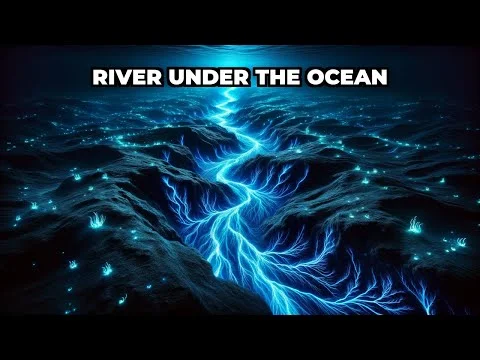
Brine pools are pockets of extremely salty water that sit at the bottom of the ocean, creating underwater “lakes” so toxic they instantly kill most marine life that enters them. These formations occur when salt deposits on the seafloor dissolve into seawater, creating a solution five times saltier than normal ocean water that’s so dense it forms a distinct layer with its own shoreline and waves.
How Brine Pools Form
Brine pools develop when underground salt deposits or oil seeps interact with seawater. The process typically occurs near tectonic activity or areas where ancient salt beds lie buried beneath the seafloor. When these salt deposits dissolve, they create a hypersaline solution that’s significantly denser than regular seawater. This density difference prevents the brine from mixing with the surrounding ocean, causing it to pool in depressions on the seafloor like a separate body of water.
Why They’re Deadly to Marine Life
The extreme salinity of brine pools creates a hostile environment that most marine organisms cannot survive. Fish that swim into these pools are instantly paralyzed due to the shock of the hypersaline environment. Crabs and other bottom-dwellers that wander in become disoriented and often cannot find their way out, eventually dying from the toxic conditions. The pools also contain little to no oxygen and may have high concentrations of hydrogen sulfide, making them even more lethal.
Life in the Impossible
Despite their deadly nature, brine pools host unique ecosystems of extremophile organisms. These microscopic life forms have adapted to thrive in conditions that would kill most other organisms: zero oxygen, crushing pressure, and toxic levels of salt. Scientists have discovered bacteria and archaea that not only survive but flourish in these extreme environments, feeding on chemical compounds rather than sunlight or oxygen.
NASA’s Interest in Brine Pools
NASA researchers study brine pools as analogs for potential life on other worlds, particularly Jupiter’s moon Europa. Europa’s subsurface ocean may contain similar extreme environments where life could exist despite harsh conditions. By understanding how organisms survive in Earth’s brine pools, scientists can better predict what types of life might exist in the alien oceans of other planets and moons.
Where to Find Brine Pools
Brine pools have been discovered in various locations worldwide, including the Gulf of Mexico, the Red Sea, and the Mediterranean Sea. The most famous examples include the “Jacuzzi of Despair” in the Gulf of Mexico and several pools in the Red Sea’s Atlantis II Deep. These formations can range from small pockets a few meters across to massive lakes spanning hundreds of meters.
Scientific Significance
These underwater death traps represent some of Earth’s most extreme environments and provide valuable insights into the limits of life. They serve as natural laboratories for studying extremophile organisms and offer clues about early Earth conditions when life first emerged. The unique chemistry and biology of brine pools continue to surprise researchers and expand our understanding of where life can exist both on Earth and potentially throughout the universe.
FREQUENTLY ASKED
How deep are brine pools in the ocean? ▾
Brine pools are typically found at depths between 600 to 3,300 feet (200 to 1,000 meters) below sea level, though some exist at even greater depths.
Can humans survive swimming in a brine pool? ▾
Humans cannot survive direct contact with brine pools due to their extreme toxicity, lack of oxygen, and potential presence of deadly hydrogen sulfide gas.
How many brine pools exist in the ocean? ▾
Scientists have discovered dozens of brine pools worldwide, but the exact number is unknown as deep-sea exploration continues to reveal new formations.