How Close Can Black Holes Get to Earth Without Destroying Us?
March 25, 2026
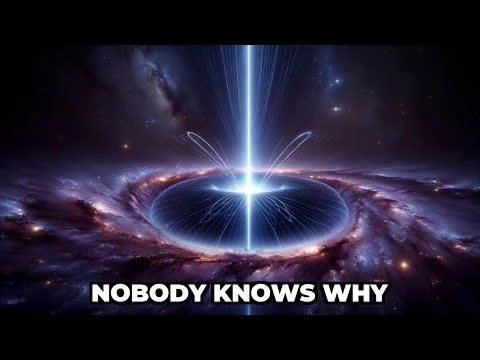
Black holes can pass within approximately 80 light-years of Earth without causing immediate destruction, as demonstrated by a stellar-mass black hole that drifted through our cosmic neighborhood just 70,000 years ago. While this distance seems vast, it represents an alarmingly close encounter in astronomical terms.
The Silent Threat Drifting Through Our Galaxy
Right now, scientists estimate that multiple black holes are silently moving through the Milky Way, invisible to our detection methods unless they interact with nearby matter. These “rogue” black holes, ejected from their original locations by gravitational interactions or stellar explosions, pose a theoretical threat that keeps astronomers vigilant. The challenge lies in their detection—without actively consuming matter and emitting X-rays, these cosmic predators remain essentially invisible against the backdrop of space.
Space: A Deadly Radiation Bath
Beyond black holes, space itself presents immediate dangers that would prove fatal within seconds. The vacuum of space isn’t truly empty—it’s filled with high-energy cosmic radiation, solar wind particles, and electromagnetic fields that would cook unprotected human tissue almost instantly. Without a spacesuit’s protection, exposure to this invisible radiation cocktail would cause rapid cellular damage, making the Hollywood depiction of gradual suffocation in space dramatically understated.
The Illusion of Starlight
When you gaze at the night sky, you’re essentially looking into the past. The light from distant stars takes so long to reach Earth that many of the celestial objects you observe may have already died, their final moments yet to be revealed to our planet. Some starlight visible tonight began its journey before Earth even formed 4.5 billion years ago, creating a cosmic time capsule that makes every evening’s sky a museum of astronomical history.
The Universe’s Accelerating Escape
Perhaps the most unsettling cosmic fact involves the universe’s expansion rate. Space itself is stretching faster than the speed of light, meaning distant galaxies are racing away from us at incomprehensible velocities. This expansion, driven by mysterious dark energy, ensures that future civilizations will witness an increasingly empty and isolated cosmos, with fewer visible galaxies and stars to inspire wonder.
The Miracle of Existence
Against these terrifying cosmic realities stands an even more remarkable fact: your existence. The Rare Earth hypothesis suggests that the precise conditions necessary for complex life are so extraordinarily specific that Earth might represent a unique oasis of consciousness in an otherwise sterile universe. The exact distance from our star, the presence of a large moon to stabilize our climate, and countless other factors had to align perfectly for life to emerge and thrive.
Our Cosmic Isolation
This rarity becomes more profound when considering the vast distances between potentially habitable worlds. Even if life exists elsewhere, the expanding universe ensures that most civilizations will remain forever isolated, separated by distances so immense that communication or travel becomes practically impossible. We may be alone not by choice, but by the fundamental structure of spacetime itself.
FREQUENTLY ASKED
What would happen if a black hole passed closer to Earth? ▾
A black hole passing within a few light-years would gravitationally disrupt planetary orbits and potentially eject Earth from the solar system. At closer distances, tidal forces would tear apart our planet entirely.
How do scientists detect invisible black holes in space? ▾
Astronomers detect dark black holes by observing their gravitational effects on nearby stars or by measuring gravitational waves when they collide with other massive objects.
Are we really alone in the universe according to current science? ▾
The Rare Earth hypothesis suggests complex life may be extremely uncommon, though scientists continue searching for evidence of life elsewhere through various space missions and radio telescopes.